
Is it possible to thrive with chronic pain?
Most conversations about chronic pain focus on what it takes away—energy, function, work, social connection. While these losses are real and significant, research is beginning to explore a different question: how do some people manage to live well despite persistent pain?
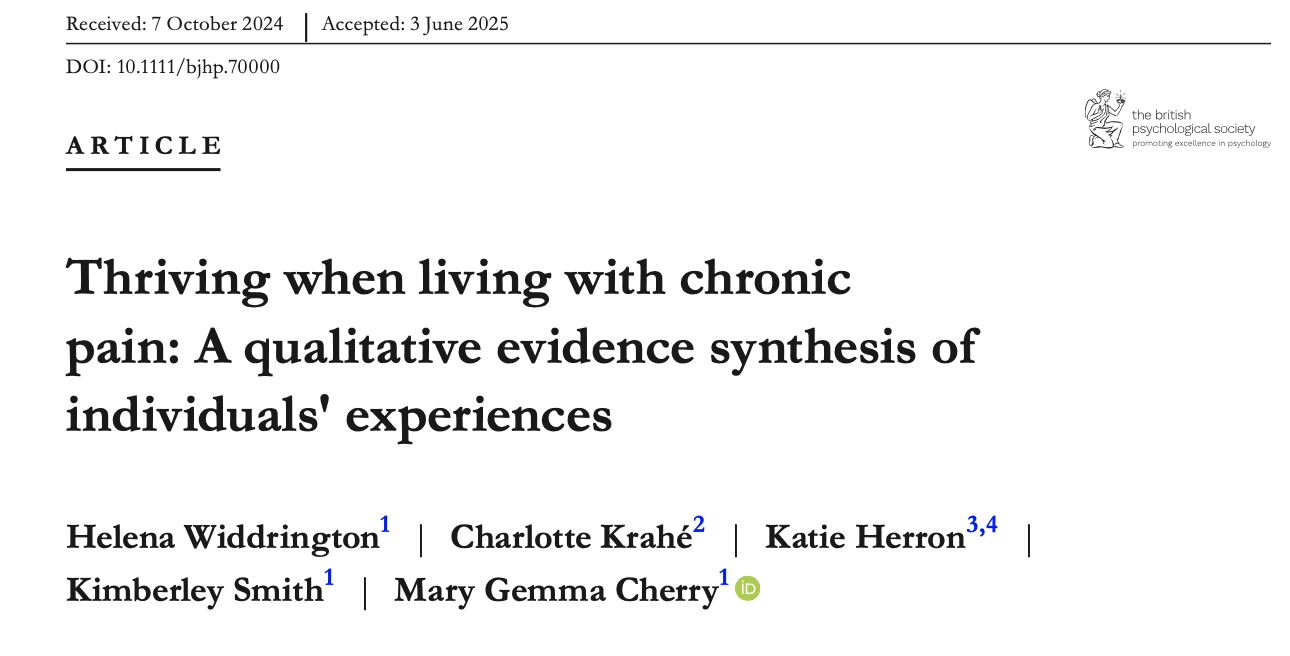
A recent qualitative evidence synthesis brought together findings from 17 studies of people living with chronic primary or arthritic pain. Instead of measuring symptom reduction, these studies examined what people themselves described as helping them thrive—maintaining wellbeing and a sense of fulfilment alongside pain.
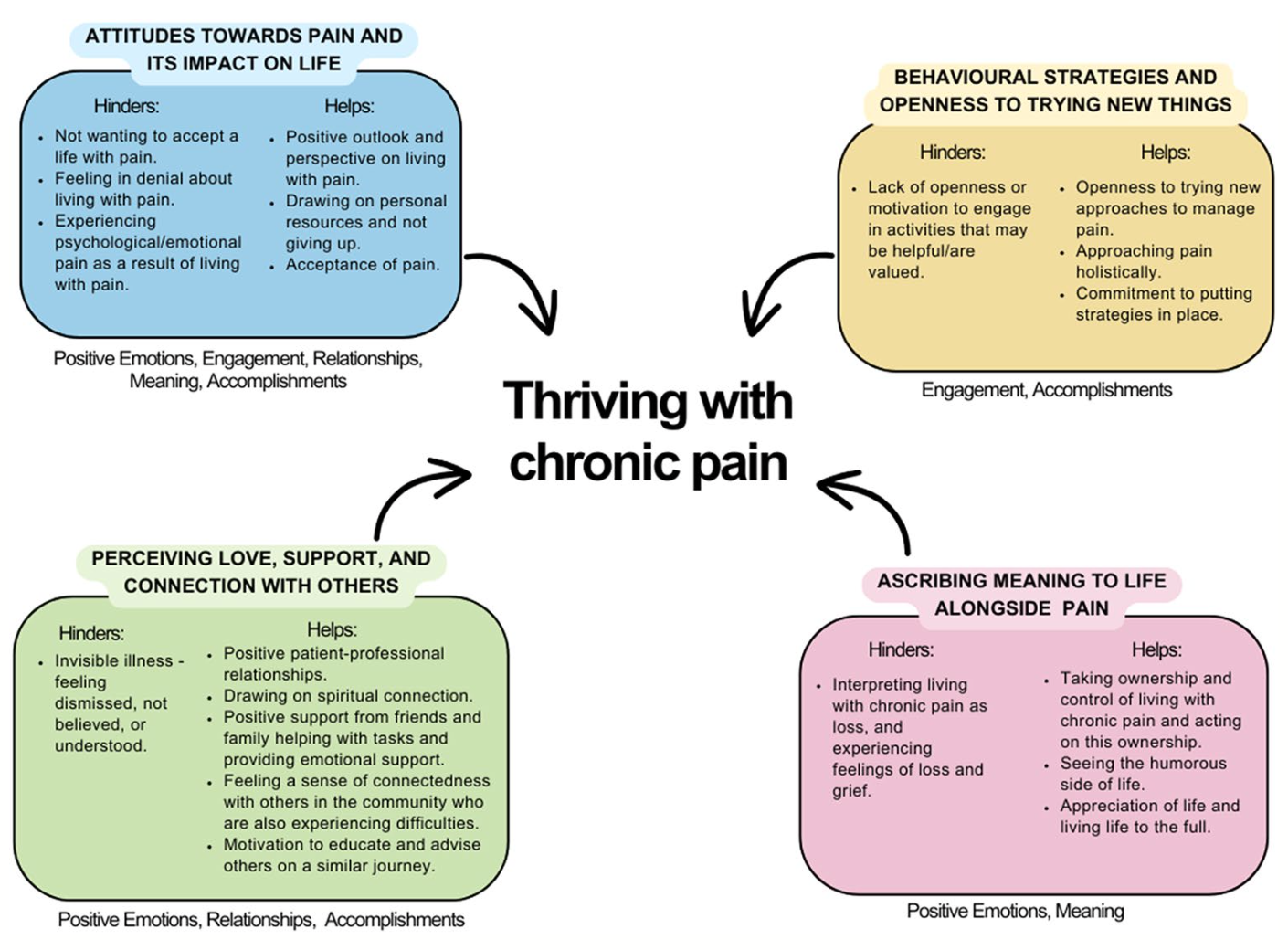
The review identified four interconnected themes:
Attitudes toward pain – People who described thriving often spoke of acceptance, reframing, and choosing to focus on life beyond their symptoms.
Openness to trying new things – Willingness to experiment with movement, daily routines, or self-care strategies, and to adapt when something no longer worked.
Connection with others – The presence of understanding relationships and supportive networks was central to wellbeing.
Finding meaning – Some found that their pain experience reshaped their values or priorities, leading to new or renewed sources of purpose.
These themes align with Seligman’s PERMA framework from positive psychology—Positive Emotion, Engagement, Relationships, Meaning, and Accomplishment—suggesting that living well with pain involves more than reducing symptoms.

Applying these ideas in your context
It’s important to acknowledge that not everyone has the same opportunities or resources to explore these changes. Financial constraints, cultural context, caregiving roles, co-existing health conditions and more, can all shape what is possible. However there is rich insight to be taken from the above themes - drawn from the lived experience of people with chronic pain, not clinicians or academics. Whilst there is no single “right” way to approach this, and change may need to happen slowly or in small steps, below are some changes you might explore:
Attitudes toward pain: If acceptance feels unrealistic, begin by noticing moments where pain isn’t the main focus, and reflect on what’s happening in those moments. Even when pain is present or at its worst, we can’t really care for ourselves or be cared for properly unless the present moment experience of the pain is accepted. As this then allows us to skillfully work with it.
Openness to new approaches: Small, low-risk experiments—such as adjusting activity pacing, trying a gentle movement class, or changing daily routines—can provide opportunities to reconnect with what you value, and also provide useful feedback about what your body is actually capable of.
Connection: Reflect on at least one person or space where you feel heard without judgement, whether that’s a friend, peer group, or health professional. These relationships matter, and finding more opportunities to connect to these important people in our life can support us. We are tribal creatures afterall.
Meaning: pain can strip our lives of meaning and leave us feeling empty, but it is possible to reflect, explore and create new ways of making meaning. This is likely the most important but challenging step as it is difficult to give any suggestions without first knowing your context.
Of course thriving with pain does not mean the absence of suffering. It means recognising the scope for wellbeing within individual circumstances, and making space for strategies that support not just physical health, but also connection, purpose, and engagement with life.
If you’d like to explore what living well with pain might mean for you, submit a message or enquiry here.
Reference:
Widdrington, H., Krahé, C., Herron, K., Smith, K., & Cherry, M. G. (2025). Thriving when living with chronic pain: A qualitative evidence synthesis of individuals' experiences. British journal of health psychology, 30(3), e70000. doi: 10.1111/bjhp.70000