
Pain, Stress, & the Neuro-Endocrine-Immune Supersystem
The current understanding of complex chronic pain is undergoing a slow but significant transformation, moving away from simple models that link pain directly to tissue damage. Instead, advanced theories frame pain as a sophisticated, subjective conclusion reached by the entire physiological organism an overriding protective response that is real, integrated, and unique to each person.
The Body as an Integrated Protection System
The foundation of this new perspective lies in recognising that the major regulatory and defense systems of the body do not operate in isolation. They function as a single, coordinated, and interdependent whole, referred to as the Neural-Endocrine-Immune (NEI) ensemble or supersystem.
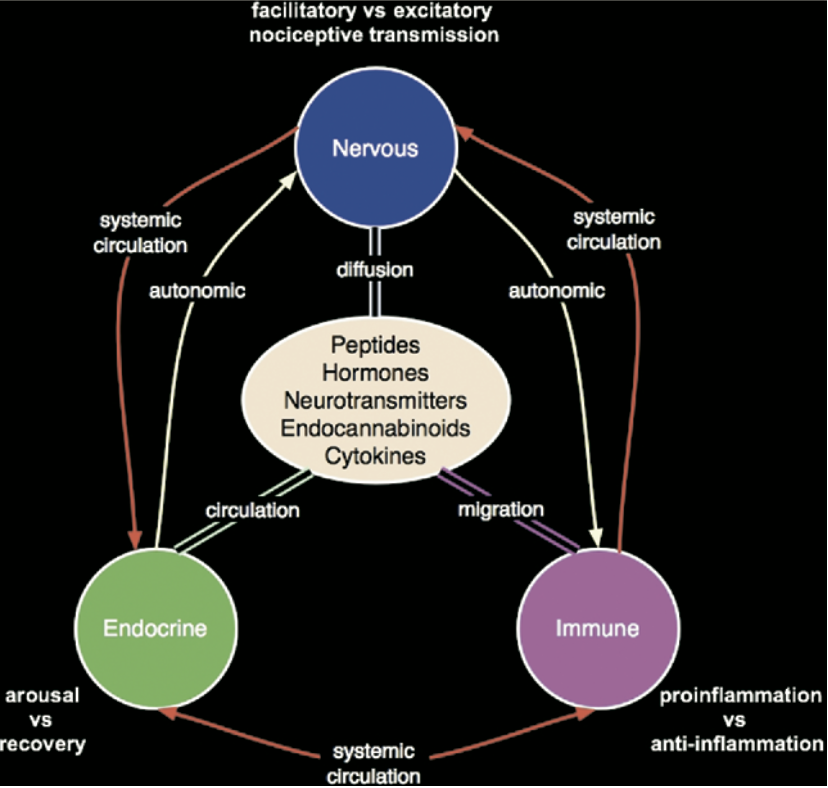
This ensemble includes:
1. The Nervous System: The central command structure.
2. The Endocrine System: The hormone system responsible for managing stress and resources.
3. The Immune System: The defense mechanism against internal threats and injury.
These three systems are in continuous communication, utilising a "common chemical language" of hormones, neurotransmitters, peptides, and cytokines, and it’s fundamental goal is to maintain the body's stability and integrity (homeostasis).
Why Pain Persists
Short-term activation of this supersystem is protective: it helps us survive injury or threat. But when stressors accumulate through ongoing pain, emotional tension, sleep disruption, or social strain, the system can become “stuck” in high alert.
Over time, this state of constant mobilisation places a metabolic burden on the body, called allostatic load. The hormones and inflammatory chemicals that once supported healing begin to create wear and tear instead. The result can be heightened sensitivity, persistent fatigue, and pain that no longer reflects tissue damage but rather a body struggling to regain equilibrium.
In this state, pain is not simply a malfunction; it’s the body’s way of signalling that the supersystem has lost its rhythm.
Pain as an Expression of the Whole
Because these systems are so deeply intertwined, the effect of pain is never just local. Whilst it might begin in one area like your shoulder, or lower back. It can then begin to influence mood, sleep, digestion, and immunity.
Pain represents the body’s best attempt to protect itself when balance feels threatened. It narrows our focus, slows us down, and demands attention. Understanding it as a product of an interconnected regulatory network allows us to see that recovery isn’t about silencing pain, it’s about helping the body feel safe and re-establish communication within its own systems.
Restoring Coherence
Supporting this supersystem means addressing the many dimensions that influence regulation: movement, rest, nutrition, relationships, and emotional wellbeing. Practices that calm stress responses like mindful breathing, gentle physical activity, and restorative sleep can all help re-adjust the body’s regulatory networks. Movement that feels safe and meaningful tells the system that the environment is no longer dangerous.
In this way, recovery becomes less about fighting pain and more about rediscovering balance; supporting the nervous, immune, and endocrine systems to work together again toward a more functional homeostasis.
References
Chapman, C. R., Tuckett, R. P., & Song, C. W. (2009). Pain and stress in a systems perspective: Reciprocal neural, endocrine, and immune interactions. The Journal of Pain: Official Journal of the American Pain Society, 9(2), 122–145.
Kiverstein, J., Kirchhoff, M. D., & Thacker, M. (2022). An embodied predictive processing theory of pain experience. Review of Philosophy and Psychology. https://doi.org/10.1007/s13164-022-00616-2